What counts as a dental no-show, and how do you measure it?
A dental no-show is a booked appointment that the patient misses without cancelling beforehand. Measure it each month as the number of no-shows divided by the number of appointments scheduled in that period, and track late cancellations, such as those made inside 24 hours, as a separate rate.
Keeping the two apart matters because they need different fixes. A no-show leaves the chair empty with no warning, while a late cancellation gives you a short window to refill the slot.
Break the rate down by appointment type, provider, day, time and patient age. In an analysis of 58,622 appointments at an Australian university dental clinic, 9% were missed, patients aged 16 to 24 had much higher odds of missing, and early morning appointments were less likely to be cancelled or missed. That is one teaching clinic, not a benchmark, but it shows how much patterns can vary inside a single schedule.
Do appointment reminders reduce dental no-shows?
Yes. Reminders are the best-supported tactic, although the evidence is moderate rather than strong. A Cochrane review of mobile phone messaging reminders found moderate-certainty evidence from seven trials with 5,841 participants that text reminders increased attendance at healthcare appointments compared with no reminder. Attendance in the included studies was 67.8% with no reminder and 78.6% with text reminders.
Dental studies point the same way. A systematic review and meta-analysis of 14 randomized trials in orthodontic patients found that those who received reminders were less likely to miss appointments, with a relative risk of 0.39. At an NHS dental access centre in Scotland, an audit of 150 appointments before and 150 after automated text reminders found failed appointments fell from 31% to 14%.
The Cochrane authors also noted that the trials were varied, the evidence was low to moderate quality and it was not enough on its own to settle policy. Reminders help, but they are one part of a system rather than a complete fix.
Which reminder channel and timing work best?
Text and phone reminders perform about the same on average, so the best channel is the one each patient actually reads. In the Cochrane review, text and phone call reminders produced similar attendance, and two studies found the cost per attendance for texts was 55% and 65% lower than for calls.
Averages hide differences between patient groups. In a randomized trial at a university pediatric dental clinic, published in the Journal of the American Dental Association in 2011, the no-show rate was 17.7% for families sent text reminders and 8.2% for families sent voice reminders. The authors suggested further study among patients who choose text reminders, which supports asking each patient how they prefer to be reached.
Timing is less settled. The Cochrane authors asked future trials to report when messages were sent because most included studies did not, so no single schedule has been proven best. A sensible starting point is a confirmation request a few days ahead and a short reminder the day before; then check your no-show rate and adjust.
Why should reminders make rescheduling easy?
A reminder that lets the patient reschedule in one step turns a likely no-show into a cancellation you can refill. The Australian university clinic study saw this trade-off: after an SMS reminder was introduced, the odds of a missed appointment fell by 14% while the odds of a cancellation rose by 15%.
That outcome only helps if the freed slot is reused. Ask patients to confirm by replying, offer a reschedule option in the same message and make sure replies are acted on the same day. A confirmation request that only accepts a yes, and sends everyone else to voicemail, loses much of its value.
How do waitlists help fill cancelled and missed appointments?
A waitlist is a list of patients who want an earlier appointment and can come in at short notice. When a reminder produces a cancellation, the waitlist gives you someone to contact straight away, so the chair is filled rather than lost.
Build it from patients who asked for an earlier slot, patients overdue for recall and patients with unscheduled treatment. Record how much notice each person needs and which times they can make, then contact them in order when a slot opens. Published research on dental waitlists is thin, so treat this as an operational practice and measure how many freed slots you actually refill.
Should a dental practice charge a no-show fee?
A written cancellation policy is useful, but a fee is a blunt tool and is not always allowed. State the policy at booking, say how much notice you need and apply it consistently, then decide whether a fee suits your patients.
Check payer rules first. Medicaid rules on missed-appointment charges are set largely by each state, and a 2021 DrBicuspid analysis reported that most states do not let dental providers bill Medicaid patients for missed or cancelled appointments. Review your state Medicaid dental manual before applying any fee to those patients.
Consider why patients miss, too. A review of US research on dental appointment-keeping found that patients with more broken appointments are often those most in need of care, facing psychological, structural or health-literacy barriers. In interviews, Swedish parents whose children regularly missed dental visits described being overloaded by daily demands. Help with timing, transport or anxiety may do more than a penalty.
| Tactic | What it does | Evidence or note |
|---|---|---|
| Text message reminders | Prompts patients before the visit at low cost | Cochrane review: moderate-certainty evidence of higher attendance than no reminder |
| Phone call reminders | Reaches patients who miss or ignore texts | Similar to texts on average; outperformed texts in one pediatric dental trial |
| Asking each patient's preferred channel | Matches the reminder to how the patient reads messages | Suggested by the pediatric trial findings; not tested directly |
| Reply to confirm or reschedule | Turns likely no-shows into earlier cancellations | Reminders cut missed visits and raised cancellations in one dental clinic study |
| Waitlist for short-notice openings | Refills slots freed by cancellations | Operational practice with little published research |
| Written cancellation policy | Sets expectations about notice | Check state Medicaid rules before charging any fee |
| Monthly no-show tracking | Shows where and when misses happen | Track no-shows and late cancellations separately |
How can Solara help reduce dental no-shows?
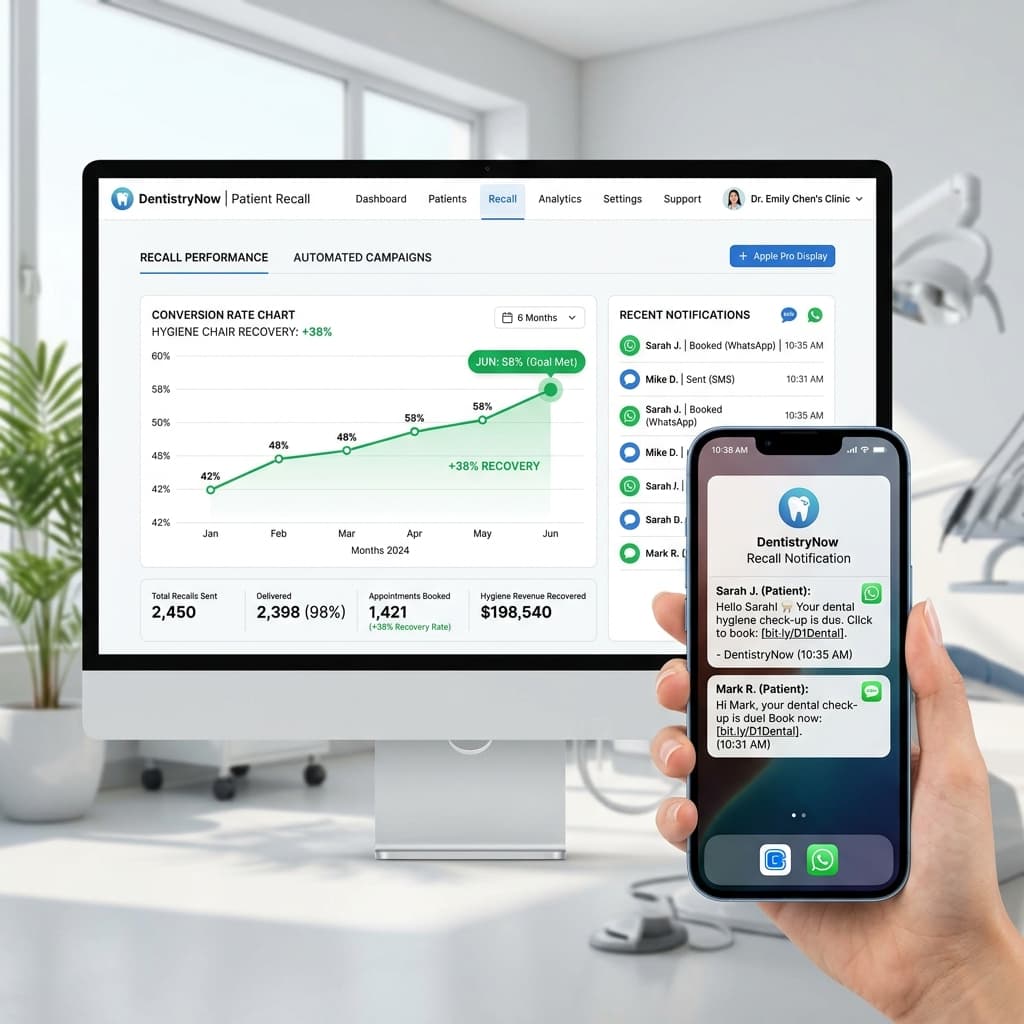
Solara automates the reminder, confirmation and rescheduling steps for practices that use OpenDental. Reminders and confirmations go out by text and email, and by WhatsApp where supported, and patients confirm or reschedule by replying, with the change written back to OpenDental.
On the Pro plan, outbound voice AI can also call patients with reminders and work through your waitlist, and campaigns work to refill cancelled slots. That covers patients who respond better to a phone call, which the pediatric trial above suggests some families do.